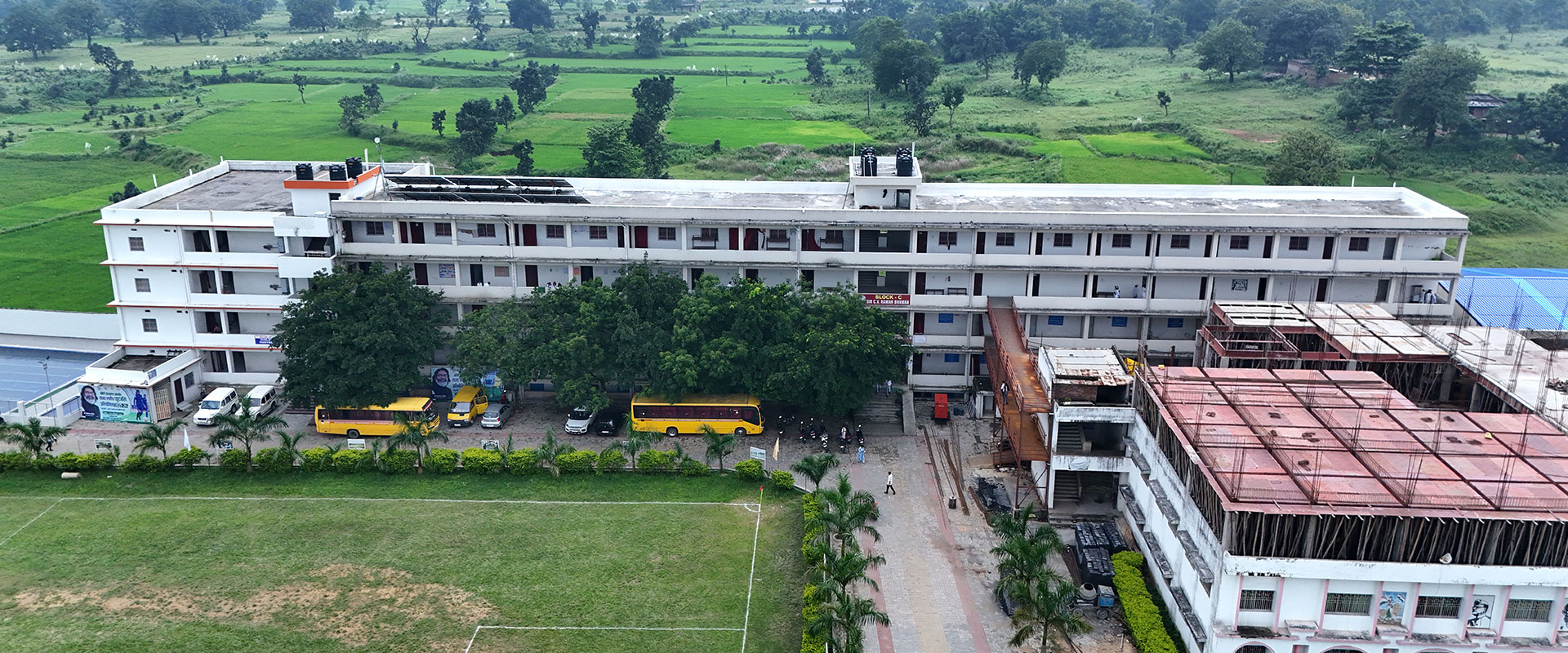
Introduction about Ph.D. in Yoga at Radha Govind University
Embarking on a journey toward a Ph.D. in Yoga at Radha Govind University is more than just an academic pursuit; it is a profound exploration of the intersection between ancient wisdom and modern scientific inquiry. As the world increasingly recognizes the holistic benefits of Yogic practices for mental health, physical well-being, and spiritual growth, the need for high-level researchers and experts in this field has never been greater. Radha Govind University (RGU), located in the serene environment of Ramgarh, Jharkhand, provides the perfect sanctuary for scholars to delve deep into the mysteries of the human consciousness and the physiological impacts of Asana, Pranayama, and Meditation.
This doctoral program is designed for professionals who wish to contribute original knowledge to the world of wellness. Whether you are a yoga practitioner, a healthcare professional, or an academician, the Ph.D. program at RGU empowers you to validate traditional practices through rigorous academic methodology. By choosing this path, you are not only advancing your career but also becoming a beacon of health and harmony in a fast-paced global society.
Ph.D Admission 2026-2027 & Writing Support Services by Shiksha Research
Eligibility Criteria for Ph.D. in Yoga at Radha Govind University
To ensure that only the most dedicated and prepared scholars enter the research community, Radha Govind University maintains a standard set of eligibility requirements. Candidates must possess a Master?s degree (M.A. or M.Sc.) in Yoga, Yogic Sciences, or a closely related discipline from a recognized university. A minimum aggregate of 55% marks (or an equivalent grade) is typically required for general category students, while a relaxation of 5% (to 50%) is provided to candidates from SC/ST/OBC and differently-abled categories as per UGC guidelines.
Aspirants who have already cleared national-level examinations such as UGC-NET (including JRF), SLET, or GATE are often viewed with high merit and may be exempt from the university?s internal entrance test, though they still must participate in the personal interview phase. Professional experience in the field of Yoga therapy, teaching, or clinical research can also be a significant advantage during the selection process.
Entrance Exam for Ph.D. in Yoga at Radha Govind University
The entrance exam serves as a gateway to academic excellence. Radha Govind University conducts its own Research Entrance Test (RET) designed to evaluate the candidate's aptitude for high-level research. The examination is generally divided into two sections: Section A focuses on Research Methodology, including qualitative and quantitative analysis, and Section B focuses on the core subject of Yoga.
The syllabus for the entrance exam includes foundational texts such as the Patanjali Yoga Sutras, Hatha Yoga Pradipika, and Gheranda Samhita, alongside modern scientific research in Yoga. Preparing for this exam requires a deep understanding of both philosophy and methodology. To streamline your application journey, you might consider seeking professional PhD Admission Assistance to ensure every step of the process is handled with precision.
Fee Structure for Ph.D. in Yoga at Radha Govind University
Understanding the financial commitment is crucial for mid-career professionals. Radha Govind University offers a competitive fee structure designed to support serious researchers without placing an undue burden on them. The fees cover registration, course work, library access, and thesis evaluation.
| Fee Component | Details (Approximate) |
|---|---|
| Registration Fee | ?5,000 - ?10,000 (One-time) |
| Course Work Fee | ?15,000 - ?20,000 |
| Annual Tuition Fee | ?50,000 - ?80,000 per year |
| Examination & Thesis Submission | ?25,000 - ?35,000 |
| Security Deposit (Refundable) | ?10,000 |
Note: Fees are subject to change based on university policy updates. Scholars are advised to check the official university portal during the time of admission.
Admission Process for Ph.D. in Yoga at Radha Govind University
The admission process at RGU is transparent and follows a systematic approach. It begins with the release of the official PhD notification, usually advertised on the university website and in leading newspapers. Prospective students must fill out the online application form and submit the necessary processing fees. After the application phase, eligible candidates are called for the Research Entrance Test.
Candidates who clear the written exam move to the next vital stage: the Personal Interview/Viva-Voce. Here, the Research Committee evaluates the candidate's research interest and their preparedness for doctoral studies. Presenting a well-structured research outline is critical here. For those struggling to define their unique niche, utilizing PhD Topic Selection and Proposal Assistance can be a game-changer in making a lasting impression on the selection committee.
Ph.D. Subjects and Specializations in Yoga at Radha Govind University
Yoga is a multidimensional subject, and Radha Govind University allows scholars to specialize in various niches that align with their professional background. These specializations allow for a deeper focused study rather than a general overview. Common specialized tracks include:
- Yoga Therapy: Focusing on specific lifestyle diseases like diabetes, hypertension, and respiratory disorders.
- Yogic Philosophy: Analyzing ancient scriptures like Upanishads and Bhagavad Gita in a contemporary context.
- Applied Yoga Psychology: Studying the impact of meditation on mental health and cognitive functions.
- Naturopathy and Yoga: Integrating natural healing systems with Yogic practices.
- Scientific Basis of Yoga: Measuring the physiological changes in the neuroendocrine system during practice.
Research Areas in Yoga at Radha Govind University
Research at RGU is geared toward solving real-world health and spiritual crises. Scholars are encouraged to look beyond books and conduct empirical studies. Ongoing research areas involve the efficacy of Yoga in corporate stress management, its role in geriatric care, and its potential in pediatric development. Scholars often collaborate with medical clinics and wellness centers to gather data.
Developing a high-quality dissertation is a rigorous task. Once your research is complete, you will need to ensure that your manuscript meets the highest academic standards. Services like Editing and Proofreading Services are invaluable for ensuring that your thesis is grammatically perfect and logically sound before the final submission.
Documents Required for Ph.D. in Yoga at Radha Govind University
Maintaining a clean documentation record is essential for a smooth admission process. Candidates should keep both digital and physical copies of the following documents ready:
- Post-Graduation Marks Sheets and Degree Certificates
- Graduation Marks Sheets and Degree Certificates
- High School and Intermediate Certificates (for age proof)
- Entrance Exam Scorecard (NET/JRF/SLET if applicable)
- Valid ID Proof (Aadhar Card/Voter ID/Passport)
- Passport-sized Photographs
- Caste/Category Certificate (if seeking relaxation)
- No Objection Certificate (NOC) from current employer (for working professionals)
- Preliminary Research Proposal (Synopsis)
Radha Govind University Ph.D. Syllabus for Yoga
The first six months to a year of the Ph.D. program are dedicated to "Course Work," which is mandatory for all scholars. The syllabus for the Ph.D. in Yoga is designed to build a strong foundation in research ethics and advanced subject knowledge.
- Paper I: Research Methodology & Statistics: Methods of sampling, data collection, hypothesis testing, and the use of statistical software (SPSS, etc.).
- Paper II: Advanced Yogic Sciences: Comparative study of various school of Yoga, Bio-mechanics of Asana, and advanced Pranic studies.
- Paper III: Computer Applications & Research Ethics: Understanding plagiarism, intellectual property, and digital tools for literature review.
- Paper IV: Elective (Based on Specialization): Subject-specific deep dive into the scholar?s chosen research area.
As you progress through your research, securing your findings is paramount. If your research leads to a unique therapeutic device or a specific methodology, you should explore Patent Filing and Support Services to protect your intellectual property.
How To Apply for Ph.D. in Yoga at Radha Govind University
The application process is designed to be user-friendly. Follow these steps to apply:
- Visit the Portal: Go to the official Radha Govind University website and navigate to the 'Research' or 'Admissions' section.
- Register: Create a user ID using your email address and mobile number.
- Form Filling: Enter your academic details, professional experience, and the specific area of Yoga you wish to research.
- Upload Documents: Attach scanned copies of your certificates and research proposal.
- Pay Application Fee: Complete the transaction using net banking or a credit/debit card.
- Submit & Download: Save the confirmation page for future reference and wait for the announcement of the Entrance Test dates.
Career Scope and Job Opportunities After Ph.D. in Yoga from Radha Govind University
The career trajectory for a Ph.D. holder in Yoga is vast and diverse. You are no longer just an instructor; you are a visionary expert. Career opportunities include:
- University Professor/Lecturer: Guiding the next generation of Yoga students in academic institutions.
- Chief Researcher: Leading research projects in wellness organizations or government bodies like the Ministry of AYUSH.
- Wellness Consultant: Designing holistic health programs for multi-national corporations.
- Clinical Yoga Therapist: Working alongside medical doctors in hospitals to provide integrative care.
- Author/Speaker: Publishing books and speaking at international conferences on spirituality and science.
For those who have contributed significantly to the field over decades of practice and leadership, some might even qualify for recognized Honorary Doctorate Programs through various global affiliations, acknowledging their life-long commitment to the discipline.
Scholarship for Ph.D. in Yoga at Radha Govind University
Radha Govind University supports its scholars through various financial aid programs. While the university offers merit-based scholarships to top-ranking entrance exam scorers, scholars are also encouraged to apply for external fellowships. Government schemes such as the "National Fellowship for OBC/SC/ST" or the "Maulana Azad National Fellowship" can significantly offset the cost of research. Furthermore, if you are a JRF holder, you will receive the standard monthly stipend as per UGC norms.
Academic success is also built upon the visibility of your work. To ensure your research reaches the global audience and meets scholarship requirements for "quality publications," leveraging Research Publication Support can help you get published in indexed journals such as Scopus or Web of Science.
FAQs Regarding Ph.D. in Yoga at Radha Govind University
1. Can I pursue a Ph.D. in Yoga part-time at RGU?
Yes, Radha Govind University usually provides options for part-time research, specifically tailored for working professionals, provided they meet the residency requirements during the course work phase.
2. Is the Ph.D. degree from RGU UGC-recognized?
Yes, Radha Govind University is recognized by the University Grants Commission (UGC), and its Ph.D. degrees are valid for teaching and government appointments.
3. What is the duration of the program?
The program typically takes a minimum of 3 years and a maximum of 6 years to complete, including course work and thesis submission.
4. Is there an age limit for applying?
Generally, there is no age limit for pursuing a Ph.D., as RGU encourages lifelong learning and research at any stage of one?s professional career.
5. Do I need to have a Master's in Yoga specifically?
While a Master's in Yoga is preferred, candidates with degrees in allied fields like Psychology, Physical Education, or Philosophy may be considered if they have a deep enough background or diploma in Yogic Sciences.




