





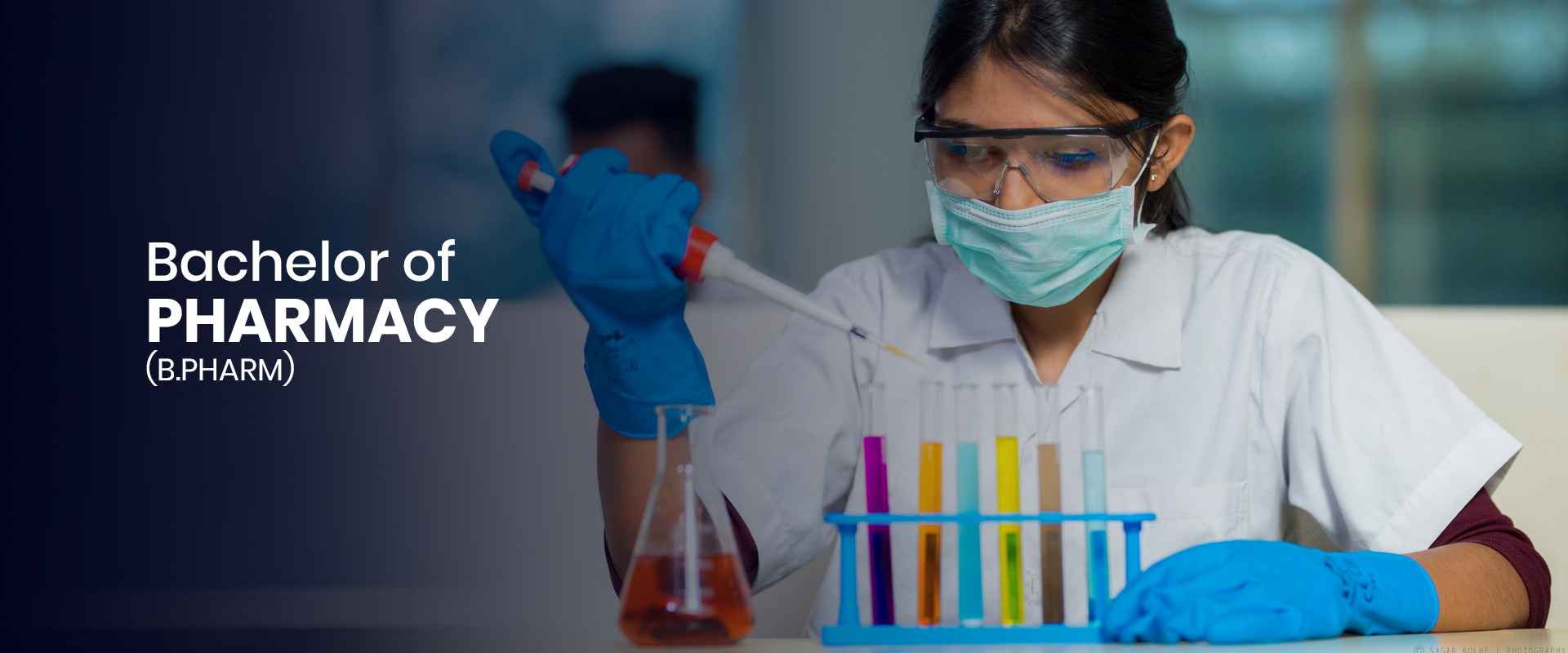
B.Pharma (Bachelor of Pharmacy) is a 4-year undergraduate curriculum that provides students with a comprehensive understanding of pharmaceutical science. The curriculum includes courses such as medicinal chemistry, pharmacology, pharmaceutics, and pharmacognosy. Students study drug formulation, quality control, and pharmaceutical management. This degree prepares students for positions in pharmaceutical research, production, quality assurance, and clinical pharmacy. B.Pharma also serves as a basis for further education in pharmacy and related professions.

Bir Tikendrajit University
Bir Tikendrajit University Admission Open
D.Pharma.
D.Pharma (Diploma in Pharmacy) is a 2-year undergraduate degree that gives basic knowledge of pharmaceutical sciences. It includes areas such as pharmacology, pharmaceutics, and medicinal chemistry...
D.Pharma.
×D.Pharma (Diploma in Pharmacy) is a 2-year undergraduate degree that gives basic knowledge of pharmaceutical sciences. It includes areas such as pharmacology, pharmaceutics, and medicinal chemistry. Students will learn about drug formulation, dispensing, and pharmacy management. The course includes practical training in laboratories and hospitals. Graduates can work as pharmacists in retail or hospitals, or continue their education in pharmacy. This diploma provides an entry-level qualification for those interested in the pharmaceutical and healthcare industries.

M.Pharma.
M.Pharma (Master of Pharmacy) is a postgraduate degree program that normally lasts 2 years. It focuses on advanced pharmaceutical sciences, research methods, and specialist fields such as phar...
M.Pharma.
×M.Pharma (Master of Pharmacy) is a postgraduate degree program that normally lasts 2 years. It focuses on advanced pharmaceutical sciences, research methods, and specialist fields such as pharmacology, pharmaceutics, and medicinal chemistry. The curriculum blends theoretical knowledge with practical laboratory work to prepare students for employment in pharmaceutical research, medication development, quality control, and academia. Graduates frequently go on to work for pharmaceutical businesses, research institutions, or pursue PhD degrees in pharmacy.
POPULAR COURSES
(D.ED(TCH))
A.N.M.
Acharya - Navyavyakarna
Acharya - Phalita Jyotisha
Acharya - Sanskrit Sahitya
Acharya - Siddhanta Jyotisha
Adobe Photoshop
Advance Certificate Course in Beauty Therapy
Advance Certificate Course in Cosmetology
Advance Certificate Course in Hair Dressing
Advance Certificate Course in Makeup Artistry
Advance certificate Course in Nail Technology
Advance Diploma in Anesthesia Technology
Advance Diploma In Child Guidance And Counselling
Advance Diploma in Dialysis Technology
Advance Diploma in Disciples India
Advance Diploma in Fashion Design & Technology
Advance Diploma in Industrial Safety
Advance Diploma In Insurance Sales
Advance Diploma in Interior Designing
Advance Diploma in Journalism & Mass Communication
Advance Diploma in Medical Lab Technology
Advance Diploma in Operation Theatre Technology
Advance Diploma in Radiology & Imaging Technology
Advance Diploma of Proficiency in French
Advance Diploma of Proficiency in German
Advance Diploma of Proficiency in Russian
Advanced Certificate in Medical Microbiology Laboratory Technology (ACMMLT)
Advanced Certified Software Developer
Advanced Diploma in 3D Printing Technology
Advanced Diploma in Animation
Advanced Diploma in Aviation, Hospitality and Tourism
Advanced Diploma in Computer Application
Advanced Diploma in Computer Software, System Analysis & Application
Advanced Diploma in Data Science
Advanced Diploma in Hardware And Networking
Advanced Diploma in Information Technology
Advanced Diploma in Machine Learning
Advanced Diploma in Multimedia Programming
Advanced Diploma in Networking
Advanced Diploma in Sound Recording Technology
Advanced Diploma in Textile Design
Advanced Diploma in Vastu and Jyotish
Agriculture & Allied Services
Agriculture & Horticulture
Agriculture & Live Stock Production
Agriculture Technology
AHDP Diploma In Animal Husbandry Program
Arogyamitra
Artificial Intelligence And Machine Learning
Automobile Technology
B,Com. in Computer Application
B. Sc. Hons. in Anaesthesia & Operation Theatre Technology
B. Sc. Hons. in Emergency Medical Technology
B. Sc. Hons.in Medical Laboratory Technology
B. Sc. in Hospitality and Tourism Management
B. Tech. in Fisheries Engineering
B. Tech. in Leather technology
B.A. General
B.A. B.Ed.
Popular Stream
State
Andaman and Nicobar Island (UT)
Andaman and Nicobar Islands
Andhra Pradesh
Arunachal Pradesh
Assam
Bihar
Chandigarh
Chandigarh (UT)
Chhattisgarh
Dadra and Nagar
Dadra and Nagar Haveli
Dadra and Nagar Haveli (UT)
Daman and Diu
Daman and Diu (UT)
Delhi
Delhi (NCT)
Donets'k
Goa
Gujarat
Gujarat
Haryana
Himachal Pradesh
Jammu and Kashmir
Jammu and Kashmir(UT)
Jharkhand
jjj
Karnataka
Kerala
Ladakh(UT)
Lakshadweep
LAKSHADWEEP (UT)
Madhya Pradesh
Maharashtra
Manipur
Meghalaya
Mizoram
Nagaland
Niigata
Odisha
Puducherry