
Ph.D. in Computer Science and Engineering usually requires 4-6 years to attain, depending on the university and the stage of the study. This advanced degree focuses cutting-edge research in fields such as artificial intelligence, machine learning, cybersecurity, computer networks, and software engineering. Students take tough courses, perform unique research, and submit a dissertation under faculty supervision. The program of study encourages skill in problem-solving, critical thinking, and innovation in the sector. Graduates are prepared to work in academia, research labs, or high-level positions within the technology business. Admission usually requires a master's degree in a related discipline, an impressive academic record, and research potential. Teaching or research fellowships are common sources for funding.

D Y Patil International University
D Y Patil International University Admission Open

Ph.D. in Human Resource Management
Ph.D. in Human Resource Management normally takes 3-5 years to complete, depending on the institution and whether the student studies full-time or part-time. This advanced degree focuses on the gro...
Ph.D. in Human Resource Management
×Ph.D. in Human Resource Management normally takes 3-5 years to complete, depending on the institution and whether the student studies full-time or part-time. This advanced degree focuses on the growth of expertise in human resource theory, research methodology, and human capital strategy. Students undergo difficult coursework on topics such as organizational behavior, labor relations, talent management, and HR analytics. The curriculum concludes with original research and a dissertation, which contributes new knowledge to the discipline. Graduates are suitable for high-level roles in academia, research institutions, or as human resource executives in large corporations. This degree prepares students to develop HR policy, lead corporate change, and tackle difficult workforce concerns in a global environment.

Ph.D. in Journalism And Mass Communication
Ph.D. in Journalism and Mass Communication usually takes 3-5 years to complete, depending on the program and research requirements. This postgraduate degree emphasizes in-depth research and a...
Ph.D. in Journalism And Mass Communication
×Ph.D. in Journalism and Mass Communication usually takes 3-5 years to complete, depending on the program and research requirements. This postgraduate degree emphasizes in-depth research and analysis of media, communication theories, and their societal implications. Students pursue challenging courses, conduct independent research, and often serve as teaching assistants. The program culminates with a doctoral dissertation, which contributes new information to the regulation. Graduates have the abilities to work in academia, advanced research, media policy, or as leaders in media organizations. Digital media technology, media ethics, global communication, data journalism, and emerging trends in mass communication may all be important topics to research.

Ph.D. in Biotechnology
Ph.D. in Biotechnology is an advanced research degree that involves biology, technology, and engineering. It generally takes 4-6 years to complete. The curriculum focuses on discovering innovative...
Ph.D. in Biotechnology
×Ph.D. in Biotechnology is an advanced research degree that involves biology, technology, and engineering. It generally takes 4-6 years to complete. The curriculum focuses on discovering innovative solutions to healthcare, agricultural businesses, and environmental issues. Students engage in intensive coursework, laboratory research, and frequent collaborations with industry partners. Genetic engineering, bioinformatics, molecular biology, and bioprocess engineering are all significant study fields. Candidates have to do original research, publish in peer-reviewed publications, and defend their doctoral thesis. This degree prepares graduates for managerial positions in academia, research institutes, pharmaceutical businesses, and biotech startups, advancing disciplines such as medication development, sustainable agriculture, and biofuel production.

Ph.D. in Biochemistry
A Ph.D. in Biochemistry normally takes 4-6 years to complete, with a concentration on the chemical processes found within and related to living organisms. This advanced degree needs intensive labor...
Ph.D. in Biochemistry
×A Ph.D. in Biochemistry normally takes 4-6 years to complete, with a concentration on the chemical processes found within and related to living organisms. This advanced degree needs intensive laboratory research, data analysis, and the creation of a unique thesis. Students analyze molecular biology, enzymology, and cellular metabolism. The program often involves coursework, teaching assistantships, and the publication of research publications. Graduates have the ability to pursue careers in academia, pharmaceutical research, biotechnology, and allied fields. The doctoral program develops critical thinking, problem-solving abilities, and the ability to design and conduct autonomous research, resulting in important contributions to the field of biochemistry and related life sciences.
Ph.D. in Microbiology
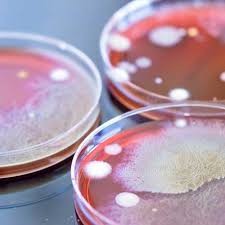
Ph.D. in Microbiology usually takes 4-6 years to complete which involves extensive research on microorganisms, their interactions, and their impact on various ecosystems. The academic program inclu...
Ph.D. in Microbiology
×Ph.D. in Microbiology usually takes 4-6 years to complete which involves extensive research on microorganisms, their interactions, and their impact on various ecosystems. The academic program includes advanced coursework, laboratory research, and a dissertation. Students research bacterial genetics, virology, immunology, and microbial ecology. They acquire experts in cutting-edge procedures such as gene sequencing, bioinformatics, and microscopy. This degree prepares graduates for professions in academia, biotechnology, pharmaceuticals, and public health, granting them the skills they need to address global issues such as antibiotic resistance and new infectious diseases.
Ph.D. in Molecular Biology
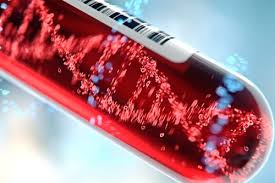
Ph.D. in Molecular Biology typically spans 4 - 6 years, encompassing advanced coursework, comprehensive exams, and original research. This program delves into the molecular mechanisms of biolo...
Ph.D. in Molecular Biology
×Ph.D. in Molecular Biology typically spans 4 - 6 years, encompassing advanced coursework, comprehensive exams, and original research. This program delves into the molecular mechanisms of biological processes, including DNA replication, gene expression, and protein synthesis. Students engage in hands-on laboratory work, utilizing techniques such as PCR, sequencing, and CRISPR to investigate cellular functions and disease mechanisms. Collaboration with interdisciplinary teams is common, fostering a broader understanding of the field. Graduates often pursue careers in academia, biotechnology, pharmaceuticals, or healthcare, contributing to advancements in genetic research, therapeutic development, and innovative biotechnological solutions.

Ph.D. in Statistics
Ph.D. in Statistics typically spans 4 - 6 years and involves advanced coursework in statistical theory, methodology, and application. The program often includes courses in multivariate analysi...
Ph.D. in Statistics
×Ph.D. in Statistics typically spans 4 - 6 years and involves advanced coursework in statistical theory, methodology, and application. The program often includes courses in multivariate analysis, Bayesian statistics, statistical modeling, and data mining. Students are expected to conduct original research, culminating in a dissertation that contributes new knowledge to the field. Ph.D. candidates may also participate in teaching and mentoring undergraduate students. Admission usually requires a strong background in mathematics and statistics, along with GRE scores and letters of recommendation. Graduates often pursue careers in academia, industry, or government, focusing on data analysis, research, and statistical consulting.

Ph.D. in Biomedical Engineering
Applying engineering concepts to healthcare and medical technologies is the main focus of a Ph.D. in Biomedical Engineering, which normally takes 4 -6 years to finish. The curriculum blends in...
Ph.D. in Biomedical Engineering
×Applying engineering concepts to healthcare and medical technologies is the main focus of a Ph.D. in Biomedical Engineering, which normally takes 4 -6 years to finish. The curriculum blends in-depth research into creating novel solutions for medical problems with courses in biomaterials, biomechanics, medical imaging, bioinformatics, and tissue engineering. Students work on projects pertaining to drug delivery systems, rehabilitation, diagnostics, and prosthetics. A solid background in biology, engineering, or similar disciplines is typically required for admission. Graduates can advance the knowledge and implementation of medical technologies through professions in academia, pharmaceuticals, medical research, or high-tech biomedical firms.

Ph.D. in Artificial Intelligence
With an emphasis on cutting-edge research in machine learning, deep learning, natural language processing, computer vision, and robotics, a Ph.D. in Artificial Intelligence (AI) normally takes 4-6&...
Ph.D. in Artificial Intelligence
×With an emphasis on cutting-edge research in machine learning, deep learning, natural language processing, computer vision, and robotics, a Ph.D. in Artificial Intelligence (AI) normally takes 4-6 years to finish. The curriculum blends in-depth practical research with fundamental courses in AI theory, algorithms, and data science, allowing students to work on innovative projects and offer novel insights into the field. There is a thorough examination of subjects including neural networks, reinforcement learning, and ethical AI. A solid foundation in computer science, mathematics, or a similar discipline is typically required for admission. Graduates are equipped for jobs in research, academia, and executive roles in tech firms and AI-related sectors.

Ph.D. in Public Administration
A Ph.D. in Public Administration is a research-oriented program that investigates the philosophy, practice, and management of public-sector organizations and policies. The program typically lasts 3...
Ph.D. in Public Administration
×A Ph.D. in Public Administration is a research-oriented program that investigates the philosophy, practice, and management of public-sector organizations and policies. The program typically lasts 3-5 years and covers topics such as public policy analysis, governance, organizational theory, administrative ethics, and public service leadership. Students do original research to address contemporary issues in public administration, social justice, and governmental reform. In general, admission needs a Master's degree in Public Administration, Political Science, or a closely related discipline. Graduates work in academics, government agencies, non-governmental organizations (NGOs), and think tanks, helping to establish effective public policies and administrative procedures.

Ph.D. in Applied Mathematics
Typically lasting 4-5 years, a Ph.D. program in applied mathematics focuses on applying sophisticated mathematical methods to address practical issues. This research-intensive degree blends or...
Ph.D. in Applied Mathematics
×Typically lasting 4-5 years, a Ph.D. program in applied mathematics focuses on applying sophisticated mathematical methods to address practical issues. This research-intensive degree blends original research with demanding training in subjects including mathematical modeling, differential equations, optimization, and numerical analysis. Students frequently work in interdisciplinary teams, bringing mathematical techniques to disciplines like as economics, biology, engineering, and physics.Graduates are ready for jobs in research institutes, academia, or sectors including data science, technology, and finance. The program places a strong emphasis on computational techniques, problem-solving abilities, and the capacity to convert difficult mathematical ideas into useful applications.

Ph.D. in Machine Learning
Ph.D. in Machine Learning is a graduate research degree that focuses on creating algorithms and models that allow computers to learn from data and make predictions or judgments. The program, which...
Ph.D. in Machine Learning
×Ph.D. in Machine Learning is a graduate research degree that focuses on creating algorithms and models that allow computers to learn from data and make predictions or judgments. The program, which typically takes 3-5 years to finish, covers advanced mathematics, statistics, data mining, neural networks, and deep learning courses, as well as considerable research. Students work on projects involving supervised and unsupervised learning, reinforcement learning, and artificial intelligence applications. Graduates frequently work in academia, research labs, or technology firms, contributing to advances in artificial intelligence, data science, and automation in fields such as healthcare, finance, and robotics.

Ph.D. in Public Policy
Ph.D. in Public Policy is a highly specialized research degree that focuses on the analysis, formulation, and evaluation of public policies at the local, national, and international levels. The cur...
Ph.D. in Public Policy
×Ph.D. in Public Policy is a highly specialized research degree that focuses on the analysis, formulation, and evaluation of public policies at the local, national, and international levels. The curriculum, which typically lasts three to five years, covers a wide range of topics including policy analysis, governance, public administration, economic policy, environmental policy, health policy, social justice, and the role of institutions in affecting public decisions. Students perform original research on the impact of government acts, policy effectiveness, policy formulation, and the influence of public opinion, interest groups, and political institutions on policymaking. Graduates of the program frequently work in academia, government agencies, think tanks, international organizations, non-governmental organizations (NGOs), or consulting businesses that focus on policy research and analysis. Admission normally requires a master's degree in public administration,political science, economics, or a related field, with strong analytical and research skills.

Ph.D. in Computational Biology
Ph.D. in Computational Biology focuses on using computational techniques and mathematical models to understand biological systems and processes. Typically lasting 3 to 5 years, the program co...
Ph.D. in Computational Biology
×Ph.D. in Computational Biology focuses on using computational techniques and mathematical models to understand biological systems and processes. Typically lasting 3 to 5 years, the program combines coursework in bioinformatics, algorithms, systems biology, and data science with original research. Students explore topics such as protein structure prediction, genomics, molecular modeling, and computational drug design. Research may also include the analysis of large biological datasets, disease modeling, and the development of machine learning techniques to interpret biological data. Graduates are prepared for careers in academia, biotechnology, pharmaceuticals, and healthcare, contributing to advancements in personalized medicine, drug discovery, and the understanding of complex biological systems.

Ph.D. in Business Analytics
Ph.D. in Business Analytics emphasizes the use of data-driven decision-making tools and advanced analytical methodologies to tackle difficult business problems. The program, which typically l...
Ph.D. in Business Analytics
× Ph.D. in Business Analytics emphasizes the use of data-driven decision-making tools and advanced analytical methodologies to tackle difficult business problems. The program, which typically lasts 3 to 5 years, integrates statistics, machine learning, optimization, and data mining courses with intensive research in predictive analytics, big data, and decision modeling. Students look at how analytics can improve corporate strategy, operations, marketing, and finance. Graduates are prepared for careers in academia, consultancy, or high-level positions in industries such as finance, marketing, healthcare, and technology, where they will drive data-driven transformations and innovation in businesses of all sizes.

Ph.D. in Digital Marketing And Advertising
It usually takes 4 - 5 years to finish the demanding, research-focused Ph.D. degree in digital marketing and advertising. Advanced subjects in consumer behavior analysis, data-driven adv...
Ph.D. in Digital Marketing And Advertising
×It usually takes 4 - 5 years to finish the demanding, research-focused Ph.D. degree in digital marketing and advertising. Advanced subjects in consumer behavior analysis, data-driven advertising, social media marketing, digital marketing tactics, and emerging technologies are all covered in the curriculum. Students conduct original research, write papers for academic use, and gain proficiency in planning, carrying out, and assessing digital marketing campaigns. Graduates of the program are prepared for senior research/consulting positions in the marketing and advertising sector or for academic jobs at universities. A research proposal, letters of recommendation, and an excellent basis in marketing, advertising, or another related field are required for admission, which makes it extremely competitive.

Ph.D. in Cell and Tissue Engineering
A Ph.D. in Cell and Tissue Engineering is typically a 4-6 year program that provides advanced training in the interdisciplinary field of developing biological substitutes to restore, maintain, or i...
Ph.D. in Cell and Tissue Engineering
×A Ph.D. in Cell and Tissue Engineering is typically a 4-6 year program that provides advanced training in the interdisciplinary field of developing biological substitutes to restore, maintain, or improve tissue function. Stem cell biology, biomaterials, bioreactor design, tissue architecture, and the clinical implementation of engineered tissues and organs are among the subjects covered in the curriculum. In order to advance the scholarly understanding of cell-material interactions, tissue regeneration, and the creation of novel therapeutic approaches for ailments like organ failure, traumatic injuries, and degenerative diseases, students frequently collaborate with medical research centers, biotechnology companies, or hospitals to conduct original research. Graduates of this program are equipped to work in regulatory affairs, tissue engineering companies, biomedical research, academia, and medical device development.

Ph.D. in Health Care Diagnostics
A Ph.D. in Health Care Diagnostics is typically a 4-6 year program that provides advanced training in the development, evaluation, and application of diagnostic technologies and techniques used in...
Ph.D. in Health Care Diagnostics
×A Ph.D. in Health Care Diagnostics is typically a 4-6 year program that provides advanced training in the development, evaluation, and application of diagnostic technologies and techniques used in clinical practice. Biomedical engineering, medical imaging, in vitro diagnostics, bioinformatics, and the conversion of research results into better diagnostic instruments and procedures are among the subjects covered in the program. In order to advance the scholarly understanding of disease mechanisms, optimize diagnostic accuracy, and integrate cutting-edge technologies like artificial intelligence and point-of-care testing, students frequently collaborate with healthcare providers, diagnostic companies, or research institutes to conduct original research. The program's graduates are equipped for professions in academia, clinical laboratory management, medical device research and development, healthcare administration, and regulatory affairs, where they can apply their expertise in health care diagnostics to enhance patient outcomes, improve clinical decision-making, and advance the field of diagnostic medicine.