Ph.D. in computer science usually takes 4-6 years to complete, depending on the coursework and research progress. This advanced degree emphasizes producing unique research in a specific field of computer science, such as artificial intelligence, cybersecurity, or algorithms. Students undergo advanced courses, take thorough tests, and produce a dissertation based on their research findings. The curriculum trains participants in critical thinking, problem solving, and innovative technology development. Graduates frequently pursue careers in academia, research institutions, or managerial positions in the technology business. A Ph.D. in Computer Science necessitates devotion, intellectual curiosity, and the capacity to bring novel information to the area.

Indian Association for the Cultivation of Science
Indian Association for the Cultivation of Science Admission Open

Ph.D. in Computer Science
Ph.D. in computer science usually takes 4-6 years to complete, depending on the coursework and research progress. This advanced degree emphasizes producing unique research in a specific field...
Ph.D. in Computer Science
×
Ph.D. in Chemistry
Ph.D. in Chemistry takes around 4-6 years to complete, depending on the research project and institution. This doctoral program emphasizes distinctive research in certain areas of chemistry, such a...
Ph.D. in Chemistry
×Ph.D. in Chemistry takes around 4-6 years to complete, depending on the research project and institution. This doctoral program emphasizes distinctive research in certain areas of chemistry, such as organic, inorganic, physical, or analytical chemistry. Students pursue more advanced courses, perform substantial laboratory research, and develop a dissertation based on their findings. The program includes generating hypotheses, designing experiments, analyzing data, and bringing new knowledge to the field. Ph.D. candidates frequently interact with other experts, give presentation at conferences, and publish articles in scientific publications. This degree equips graduates with job opportunities in academia, industry research, government laboratories, and other scientific fields that require advanced chemical skills.
Ph.D. in Microbiology
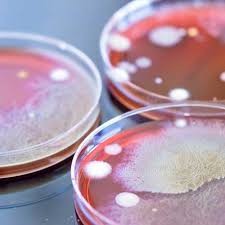
Ph.D. in Microbiology usually takes 4-6 years to complete which involves extensive research on microorganisms, their interactions, and their impact on various ecosystems. The academic program inclu...
Ph.D. in Microbiology
×Ph.D. in Microbiology usually takes 4-6 years to complete which involves extensive research on microorganisms, their interactions, and their impact on various ecosystems. The academic program includes advanced coursework, laboratory research, and a dissertation. Students research bacterial genetics, virology, immunology, and microbial ecology. They acquire experts in cutting-edge procedures such as gene sequencing, bioinformatics, and microscopy. This degree prepares graduates for professions in academia, biotechnology, pharmaceuticals, and public health, granting them the skills they need to address global issues such as antibiotic resistance and new infectious diseases.

Ph.D. in Mathematics
Ph.D. in Mathematics is a terminal degree that usually requires 4-7 years to accomplish after acquiring a bachelor's degree. The curriculum comprises advanced coursework in pure and appli...
Ph.D. in Mathematics
×Ph.D. in Mathematics is a terminal degree that usually requires 4-7 years to accomplish after acquiring a bachelor's degree. The curriculum comprises advanced coursework in pure and applied mathematics, as well as independent research that leads to the completion of a doctorate research. PhD students acquire proficiency in abstract algebra, real and complex analysis, topology, and discrete mathematics. The degree prepares graduates for academic careers as university professors and researchers, as well as jobs in industries such as banking, technology, and government that require strong quantitative and problem-solving abilities.

Ph.D. in Physics
Ph.D. in Physics generally requires 5-7 years to complete, and it comprises advanced coursework, independent research, and a doctorate dissertation. Students explore the fundamental concepts...
Ph.D. in Physics
×Ph.D. in Physics generally requires 5-7 years to complete, and it comprises advanced coursework, independent research, and a doctorate dissertation. Students explore the fundamental concepts of matter and energy, and often specialize in quantum mechanics, astrophysics, or particle physics. The program fosters critical thinking, problem-solving skills, and knowledge in experimental or theoretical physics. Graduates are prepared to work in academia, research institutions, or industry, contributing to innovative scientific discoveries and technical developments. This challenging degree requires dedication, intellectual curiosity, and the ability to push the limits of human knowledge of the physical cosmos.

Ph.D. in Immunology
A Ph.D. in Immunology is a research-oriented program that investigates the immune system, including cellular and molecular mechanisms, immunological responses, and the role of immunity in disease....
Ph.D. in Immunology
×A Ph.D. in Immunology is a research-oriented program that investigates the immune system, including cellular and molecular mechanisms, immunological responses, and the role of immunity in disease. The curriculum typically lasts 3 to 5 years and covers topics such as immunogenetics, autoimmune disorders, immunotherapy, vaccinations, and cancer immunology. Students do experimental research, using techniques such as flow cytometry, molecular biology, and cell culture to investigate immunological functions and interactions. In general, admission requires a Master's degree in Immunology, Biochemistry, or a closely related subject. Graduates pursue positions in academic research, biotechnology, pharmaceuticals, or healthcare, helping to promote immunotherapy and vaccine development.

Ph.D. in Ecology
A Ph.D. in Ecology is a research-based program that studies ecosystems, biodiversity, and organism-environment interactions. The curriculum typically lasts 3 to 5 years and covers topics such as po...
Ph.D. in Ecology
×A Ph.D. in Ecology is a research-based program that studies ecosystems, biodiversity, and organism-environment interactions. The curriculum typically lasts 3 to 5 years and covers topics such as population dynamics, conservation biology, ecosystem services, and environmental change. Students do fieldwork and laboratory research to understand ecological processes and the effects of human activity on ecosystems. Admission needs a Master's degree in ecology, biology, or a related discipline. Graduates work in academia, research institutions, government agencies, or non-governmental organizations to support environmental management, conservation efforts, policy formulation, and sustainability programs.

Ph.D. in Material Science
The study of materials, including their characteristics, composition, and functionality, is the main focus of a research-driven Ph.D. program in material science. This program, which usually lasts...
Ph.D. in Material Science
×The study of materials, including their characteristics, composition, and functionality, is the main focus of a research-driven Ph.D. program in material science. This program, which usually lasts 3-5 years, covers subjects such advanced manufacturing techniques, semiconductors, polymers, nanomaterials, and biomaterials. Students investigate material behavior at the atomic and molecular level through theoretical and experimental study, with applications in engineering, electronics, and energy storage. A Master's degree in engineering, physics, or material science is typically required for admission. Graduates can pursue academic positions in material research and development or contribute to innovation in sectors including electronics, healthcare, and aerospace.

Ph.D. in Neurobiology
Usually lasting 4-6 years, a Ph.D. program in neurobiology explores complex mechanisms of neurological system. Advanced courses in neuroanatomy, neurophysiology, molecular neuroscie...
Ph.D. in Neurobiology
×Usually lasting 4-6 years, a Ph.D. program in neurobiology explores complex mechanisms of neurological system. Advanced courses in neuroanatomy, neurophysiology, molecular neuroscience, and cognitive neuroscience are combined with original laboratory research to provide this research-intensive degree. Students work on cutting-edge research on subjects like neurodegenerative illnesses, synaptic plasticity, and brain development. Teaching assistantships, research findings publications, and presentations at scientific conferences are frequently a part of the program. Graduates are equipped to work in medical facilities, biotechnology, academia, or pharmaceutical research. Curriculum places a strong emphasis on data analysis, experimental design, and critical thinking, preparing students to further our knowledge of how the brain works and possible therapies for neurological conditions.
Ph.D. in Interdisciplinary
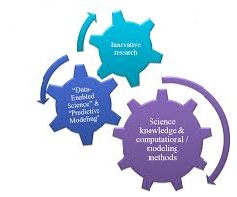
Usually lasting 3-5 years, a Ph.D. in Interdisciplinary Studies degree enables students to combine concepts and approaches from several academic fields. This degree, which is quite customisabl...
Ph.D. in Interdisciplinary
×Usually lasting 3-5 years, a Ph.D. in Interdisciplinary Studies degree enables students to combine concepts and approaches from several academic fields. This degree, which is quite customisable, promotes creative research that goes beyond conventional limits. By combining classes from different departments that are pertinent to their research interests, students create their own program. Advanced seminars on research methodology, theory, and interdisciplinary approaches are frequently included in the program. . Graduates are equipped for jobs in research institutes, academia, or creative positions in the commercial and nonprofit sectors. Students graduate from the curriculum with special skills for tackling today's global concerns because it places a strong emphasis on critical thinking, the synthesis of varied information, and the ability to approach complicated problems.

Ph.D. in Space Science & Technology
Ph.D. in Space Science & Technology is a rigorous research-focused program, typically lasting 3-5 years, where scholars explore advanced topics in space systems, astrophysics, planetary science...
Ph.D. in Space Science & Technology
×Ph.D. in Space Science & Technology is a rigorous research-focused program, typically lasting 3-5 years, where scholars explore advanced topics in space systems, astrophysics, planetary science, satellite engineering, and remote sensing. This doctorate emphasizes both theoretical and applied research, often involving collaborations with research institutions, space agencies, or private aerospace firms. Candidates may work on projects ranging from satellite design to space exploration strategies and data analysis from space missions. Graduates contribute to scientific knowledge and technological advancements in space exploration and often find opportunities in academia, government space agencies, or private aerospace companies.

Ph.D. in Human Genetics
Ph.D. in Human Genetics normally takes 4-6 years to accomplish and entails extensive study and research in the field of genetics and its application to human health and illness. The curriculum inte...
Ph.D. in Human Genetics
×Ph.D. in Human Genetics normally takes 4-6 years to accomplish and entails extensive study and research in the field of genetics and its application to human health and illness. The curriculum integrates advanced genetics, molecular biology, and bioinformatics courses with unique research that leads to a doctoral dissertation. Students acquire knowledge of genetic analysis, genomic technologies, and statistical methodologies. They investigate issues such as hereditary illnesses, gene therapy, and personalised medicine. The curriculum frequently includes laboratory rotations, seminars, and opportunity to present research at conferences. Graduates are prepared for positions in academic research, biotechnology, pharmaceutical businesses, or genetic counseling, all of which contribute to a better understanding of human genetic variation and its effects on health.

Ph.D. in Applied Science and Technology
Ph.D. in Applied Science and Technology is a 4-6 year advanced research degree that focuses on the interdisciplinary application of scientific and technological ideas to real-world situations...
Ph.D. in Applied Science and Technology
×Ph.D. in Applied Science and Technology is a 4-6 year advanced research degree that focuses on the interdisciplinary application of scientific and technological ideas to real-world situations. The curriculum includes coursework, independent research, and a doctoral dissertation. Students acquire knowledge in fields like nanotechnology, biotechnology, energy systems, and materials science. Advanced seminars, laboratory rotations, and collaborative projects are common elements of the program. Candidates collaborate closely with academic mentors, undertaking innovative research that advances their subject. This degree prepares students for leadership positions in academia, business research and development, and government laboratories. Admission normally necessitates a master's degree in a related discipline and extensive research experience.
Ph.D. in Astronomy
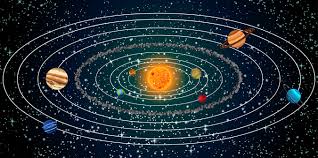
The average completion time for a Ph.D. in Astronomy is 4 - 6 years. The curriculum includes original research leading to a dissertation in addition to rigorous training in subjects like astro...
Ph.D. in Astronomy
×The average completion time for a Ph.D. in Astronomy is 4 - 6 years. The curriculum includes original research leading to a dissertation in addition to rigorous training in subjects like astrophysics, cosmology, stellar astronomy, and planetary science. Ph.D. candidates become proficient in data analysis, scientific communication, and observational methods. Graduates are equipped for jobs in academia, research facilities, space agencies, and the business community, where they will further our knowledge of the galaxy through inventive discoveries.
Ph.D. in Chemical Sciences
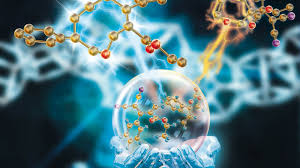
A Ph.D. in Chemical Sciences is typically a 4-6 year program that provides advanced training in the fundamental and applied aspects of chemistry. Topics like organic, inorganic, physical, analytica...
Ph.D. in Chemical Sciences
×A Ph.D. in Chemical Sciences is typically a 4-6 year program that provides advanced training in the fundamental and applied aspects of chemistry. Topics like organic, inorganic, physical, analytical, and theoretical chemistry are covered in the curriculum, along with the incorporation of multidisciplinary techniques and emerging technology. To advance the scientific understanding of chemical phenomena and the creation of novel materials, procedures, and applications, students carry out unique research, frequently in cooperation with business partners, governmental organizations, or research institutes. Graduates of this program are equipped for jobs in academia, R&D, the chemical industry, environmental consulting, and regulatory affairs, where they can use their knowledge of the chemical sciences to create new products and technologies, advance scientific understanding, and solve global issues in fields like like energy, healthcare, and sustainability.