





M.A. in English usually takes 1-2 years to finish, depending on whether it is a full-time or part-time program. This advanced degree focuses on helping students improve their grasp of literature, critical thinking, and advanced writing abilities. The curriculum frequently includes courses in diverse literary periods, genres, and critical perspectives, as well as possibilities for specialized study in fields such as creative writing, linguistics, and digital humanities. This degree provides career opportunities for professions in teaching, publishing, writing, editing, or advanced academic studies such as a Ph.D. Many colleges provide flexible choices, such as online or hybrid forms, to help working people.
Manipur University
M.A. in English
M.A. in English usually takes 1-2 years to finish, depending on whether it is a full-time or part-time program. This advanced degree focuses on helping students improve their grasp of literature, c...
M.A. in English
×
M.A. in Hindi
M.A. in Hindi is normally a 2-year postgraduate program that focuses on Hindi language, literature, and culture. The curriculum often includes advanced Hindi grammar, classical and current Hindi li...
M.A. in Hindi
×M.A. in Hindi is normally a 2-year postgraduate program that focuses on Hindi language, literature, and culture. The curriculum often includes advanced Hindi grammar, classical and current Hindi literature, literary criticism, linguistics, and a history of Hindi language and literature. Students frequently study works by notable Hindi authors, experiment with different literary styles and examine the language's growth. The program may also include courses on Hindi in the media, translation studies, and comparative literature. Last year, coursework is usually supplemented with research projects or a dissertation. This degree provides career opportunities to students for professions in academics, translation, journalism, content writing, and the cultural sector, as well as additional research in Hindi studies.
M.A. in Sociology
M.A. in Sociology normally takes 1-2 years to complete, depending on whether it is a full-time or part-time program. This graduate program emphasizes advanced sociological theory, research met...
M.A. in Sociology
×M.A. in Sociology normally takes 1-2 years to complete, depending on whether it is a full-time or part-time program. This graduate program emphasizes advanced sociological theory, research methods, and data analysis. Students investigate a variety of social concerns, institutions, and phenomena, often focusing on topics such as social injustice, globalization, urban sociology, or family studies. The program typically includes core courses, electives, and a thesis or capstone project. Graduates are equipped for positions in research, social services, education, or advanced academic studies, such as a Ph.D. degree. Some programs may provide internships or fieldwork opportunities to obtain practical experience.
M.A. in Political Science
Master of Arts (M.A.) in Political Science is a 2-year graduate program that focuses on the study of government systems, political behavior, and public policy. This advanced degree provides s...
M.A. in Political Science
×Master of Arts (M.A.) in Political Science is a 2-year graduate program that focuses on the study of government systems, political behavior, and public policy. This advanced degree provides students with a thorough understanding of political theories, research methods, and current political issues. The curriculum frequently includes courses in comparative politics, international relations, political theory, and public administration. It includes some specialized topics such as American politics, global politics, and political economy. Graduates of M.A. in Political Science degrees are well-prepared for professions in government, diplomacy, policy analysis, media, and advanced scholarly pursuits such as doctoral study.

M.A. in History
Master of Arts (M.A.) in History takes between 1-2 years, depending on whether it is a full-time or part-time degree. This advanced degree emphasizes critical thinking, research, and writing abilit...
M.A. in History
×Master of Arts (M.A.) in History takes between 1-2 years, depending on whether it is a full-time or part-time degree. This advanced degree emphasizes critical thinking, research, and writing abilities via a thorough examination of historical periods, techniques, and historiography. Students frequently specialize in specific subjects, such as American, European, or World History. The curriculum comprises lectures, research assignments, and a thesis or comprehensive exam. Many programs provide possibilities for internships, teaching assistantships, and archive work. M.A. in History provides career opportunities for professionals in education, museums, archives, publishing, or further academic programs such as a Ph.D.
M.A. in Geography
Master of Arts (M.A.) in Geography takes 2 years of full-time study and provides a thorough examination of human-environment interactions, spatial analysis, and geographical theory. The...
M.A. in Geography
×Master of Arts (M.A.) in Geography takes 2 years of full-time study and provides a thorough examination of human-environment interactions, spatial analysis, and geographical theory. The curriculum integrates advanced cartography, GIS, remote sensing, and research methods with specific themes such as urban geography, climate change, and cultural landscapes. Students frequently perform fieldwork and finish a thesis or capstone project. This degree provide career opportunities in urban planning, environmental management, GIS analysis, and other academic endeavors. Some programs provide emphases in geospatial technology or human geography, allowing students to tailor their study to their individual interests or career objectives.

M.A. in Economics
Master of Arts (M.A.) in Economics usually lasts 1-2 years, depending on full-time or part-time enrollment. This advanced degree focuses on microeconomics, macroeconomics, econometrics, and statist...
M.A. in Economics
×Master of Arts (M.A.) in Economics usually lasts 1-2 years, depending on full-time or part-time enrollment. This advanced degree focuses on microeconomics, macroeconomics, econometrics, and statistical analysis. Students examine economic theory, policy analysis, and research methods. The curriculum frequently includes electives in specialist fields such as international economics, development economics, and finance economics. Graduates are qualified for positions in government, finance, consulting, and academia. Some schools provide collaborative programs with different professions or specialize in specific economic topics. This program provides students with analytical capabilities, critical thinking ability, and a thorough understanding of economic principles and their practical applications.

M.A. in Fine Arts
Master of Arts (M.A.) in Fine Arts normally lasts 2-3 years and includes advanced study in a variety of artistic fields such as painting, sculpture, photography, and multimedia arts. This prog...
M.A. in Fine Arts
×Master of Arts (M.A.) in Fine Arts normally lasts 2-3 years and includes advanced study in a variety of artistic fields such as painting, sculpture, photography, and multimedia arts. This program blends studio practice with art theory, history, and criticism, helping students hone their creative skills and establish their voice. Seminars, workshops, and individual projects are common components of coursework, which culminate in a thesis exhibition or portfolio. Many programs have a strong emphasis on professional development, equipping graduates for employment as professional artists, curators, art educators, or arts administrators. The M.A. in Fine Arts program fosters critical thinking and inventive approaches to contemporary art practices.
M.A. in Ancient History
Master of Arts (M.A.) in Ancient History typically spans 2 years and delves into the civilizations of the ancient world, including Greece, Rome, Egypt, and Mesopotamia. This program cove...
M.A. in Ancient History
×Master of Arts (M.A.) in Ancient History typically spans 2 years and delves into the civilizations of the ancient world, including Greece, Rome, Egypt, and Mesopotamia. This program covers various aspects such as politics, culture, religion, and art, emphasizing critical analysis of historical texts and archaeological findings. Students are encouraged to engage with primary sources and develop research skills, often culminating in a thesis or dissertation. Graduates may pursue careers in academia, museums, cultural heritage management, or historical consulting. The program fosters a deep understanding of the past and its impact on contemporary society.

M.A. in Music
Master of Arts (M.A.) in Music typically spans 2 years of full-time study, focusing on advanced music theory, history, and performance. The program often includes coursework in composition, mu...
M.A. in Music
×Master of Arts (M.A.) in Music typically spans 2 years of full-time study, focusing on advanced music theory, history, and performance. The program often includes coursework in composition, musicology, ethnomusicology, and music education, allowing students to specialize in their areas of interest. Many programs require the completion of a thesis or capstone project, which involves original research or a significant performance. Admission generally requires a bachelor's degree in music or a related field, along with an audition or portfolio showcasing the candidate's musical abilities. This degree prepares graduates for careers in performance, teaching, research, and music administration.
M.A. in Mathematics
M.A. in Mathematics is a postgraduate program typically lasting 2 years, focusing on advanced mathematical theories, analytical techniques, and their ap...
M.A. in Mathematics
×M.A. in Mathematics is a postgraduate program typically lasting 2 years, focusing on advanced mathematical theories, analytical techniques, and their applications. This course is designed to deepen understanding in core areas such as algebra, calculus, topology, statistics, number theory, and mathematical modeling. Students are encouraged to explore specialized topics like differential geometry, mathematical analysis, complex analysis, and applied mathematics. The program emphasizes both theoretical and practical approaches, aiming to enhance research and problem-solving skills. Graduates can pursue careers in academia, research, finance, data science, education, or roles requiring high-level quantitative analysis, or continue with Ph.D. programs.

M.A. in Dance
M.A. in Dance typically spans 2 years of full-time study, offering a comprehensive exploration of dance theory, practice, and research. This graduate program blends advanced choreography, performan...
M.A. in Dance
×M.A. in Dance typically spans 2 years of full-time study, offering a comprehensive exploration of dance theory, practice, and research. This graduate program blends advanced choreography, performance techniques, dance history, and critical analysis. Students engage in studio work, academic courses, and often complete a thesis or final project. The curriculum may include subjects like dance pedagogy, somatics, cultural dance forms, and interdisciplinary collaborations. Many programs offer specializations in areas such as choreography, dance education, or dance therapy. Graduates are prepared for careers in professional dance, choreography, education, arts administration, or further academic pursuits. Some programs may require an audition or prior dance experience for admission.
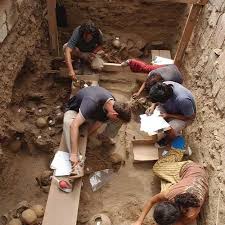
M.A. in Archaeology
Master of Arts (M.A.) in Archaeology typically spans 2 years and focuses on the study of human history and prehistory through excavation and analysis of artifacts, structures, and cultural lan...
M.A. in Archaeology
×Master of Arts (M.A.) in Archaeology typically spans 2 years and focuses on the study of human history and prehistory through excavation and analysis of artifacts, structures, and cultural landscapes. The curriculum combines theoretical coursework with practical fieldwork, enabling students to develop skills in excavation techniques, artifact analysis, and historical research. Core subjects often include archaeological methods, cultural resource management, and heritage conservation. Additionally, students may explore topics such as prehistoric societies, historical archaeology, and the application of technology in archaeology. Graduates can pursue careers in museums, research institutions, cultural resource management, or further academic research.

M.A. in Psychology
M.A. in Psychology is a graduate degree that offers in-depth study of human behavior, mental processes, and psychological theories. The curriculum typically lasts two years and covers areas s...
M.A. in Psychology
× M.A. in Psychology is a graduate degree that offers in-depth study of human behavior, mental processes, and psychological theories. The curriculum typically lasts two years and covers areas such as clinical psychology, counseling, developmental psychology, cognitive psychology, and research methodologies. Students improve their analytical and therapeutic skills through coursework, practical training, and research assignments. The curriculum equips graduates to work in clinical settings, counseling, education, or research. Graduates are prepared to work as therapists, counselors, or psychologists in a variety of settings, assisting persons with mental health concerns and contributing to advances in psychological research and practice.
M.A. in Philosophy
Master of Arts (M.A.) in Philosophy is a graduate program designed to deepen students' understanding of fundamental philosophical concepts, theories, and methods. Typically spanning 1 - 2 years...
M.A. in Philosophy
×Master of Arts (M.A.) in Philosophy is a graduate program designed to deepen students' understanding of fundamental philosophical concepts, theories, and methods. Typically spanning 1 - 2 years, this program covers areas such as ethics, logic, metaphysics, epistemology, and political philosophy. Students engage in critical thinking, analysis of classical and contemporary texts, and develop skills in writing and argumentation. Graduates can pursue careers in academia, law, publishing, government, or non-profit sectors. The M.A. in Philosophy prepares students for further research or teaching, providing a solid foundation for a wide range of intellectual and professional pursuits.

M.A. in Linguistics
M.A. in Linguistics is a postgraduate program designed to provide students with an in-depth understanding of language structure, theory, and application. This 2 year course focuses on areas such as...
M.A. in Linguistics
×M.A. in Linguistics is a postgraduate program designed to provide students with an in-depth understanding of language structure, theory, and application. This 2 year course focuses on areas such as phonetics, syntax, semantics, sociolinguistics, psycholinguistics, and language acquisition, offering both theoretical knowledge and practical research skills. Students engage with the scientific study of language, learning how language evolves, functions, and impacts society. The program also includes opportunities for specialization in various subfields of linguistics. Graduates of the program are well-prepared for careers in education, research, translation, and language technology. The M.A. in Linguistics offers both a strong academic foundation and the flexibility to explore language-related challenges in diverse real-world contexts.
Certificate in Japanese
A Certificate in Japanese is a language program designed to help students develop proficiency in the Japanese language. The course typically focuses on improving reading, writing, speaking, and lis...
Certificate in Japanese
×A Certificate in Japanese is a language program designed to help students develop proficiency in the Japanese language. The course typically focuses on improving reading, writing, speaking, and listening skills, with an emphasis on grammar, vocabulary, and cultural understanding. The duration of the program varies, but most certificate courses last between 6-12 months, depending on the intensity and level of the course. Some institutions offer part-time or full-time options, allowing flexibility for working professionals or students. Upon completion, individuals can pursue career opportunities in fields like translation, tourism, education, or business, or continue their studies to achieve higher levels of language mastery.

M.A. in Manipuri
M.A. in Manipuri is a postgraduate degree designed to provide in-depth knowledge of Manipuri language, literature, and culture. The course typically spans 2 years, divided into 4 semester...
M.A. in Manipuri
×M.A. in Manipuri is a postgraduate degree designed to provide in-depth knowledge of Manipuri language, literature, and culture. The course typically spans 2 years, divided into 4 semesters, and offers students a comprehensive understanding of various aspects of Manipuri arts, including classical and modern literature, linguistic theories, and cultural heritage. The curriculum combines theoretical learning with practical research, allowing students to explore topics such as historical texts, folklore, poetry, and the evolution of Manipuri cinema and theater. Graduates of the program are equipped for careers in teaching, research, translation, media, and cultural preservation. This program is ideal for those passionate about preserving and promoting the Manipuri language and its rich traditions.
Diploma in Sanskrit
A Diploma in Sanskrit is a short-term course designed to provide students with a comprehensive understanding of the ancient Indian language, Sanskrit. The course typically spans 1 - 2 years, d...
Diploma in Sanskrit
×A Diploma in Sanskrit is a short-term course designed to provide students with a comprehensive understanding of the ancient Indian language, Sanskrit. The course typically spans 1 - 2 years, depending on the institution. It covers various aspects of Sanskrit, including grammar, literature, and its historical significance. Students learn classical texts, philosophical works, and scriptures, such as the Vedas, Upanishads, and epics like the Ramayana and Mahabharata. The course aims to develop proficiency in reading, writing, and interpreting Sanskrit, with an emphasis on its practical applications in fields like linguistics, translation, and cultural studies. It is ideal for those seeking to explore Indian heritage, ancient texts, and scholarly research.

M.A. in Korean
M.A. in Korean focuses on advanced language skills, literature, culture, and linguistics. Core courses usually cover Advanced Korean Language, Korean Linguistics, Korean Literature, and Moder...
M.A. in Korean
×M.A. in Korean focuses on advanced language skills, literature, culture, and linguistics. Core courses usually cover Advanced Korean Language, Korean Linguistics, Korean Literature, and Modern Korean History. Students can select electives such as Korean Film and Media, Translation and Interpretation, Korean Society and Politics, Korean Pedagogy, or Comparative Literature. Research methods, writing, and speaking abilities are stressed. Programs frequently provide study-abroad or internship opportunities in South Korea to facilitate immersive learning. Graduation may include a thesis or comprehensive exams. Academic opportunities include translation, diplomacy, international business, journalism, and cultural interaction, with certain degrees needing prior Korean competence.

Certificate Course in Chinese
Certificate Course in Chinese is an introductory curriculum that teaches students the fundamentals of the Chinese language, including speaking, reading, writing, and listening skills. The course co...
Certificate Course in Chinese
×Certificate Course in Chinese is an introductory curriculum that teaches students the fundamentals of the Chinese language, including speaking, reading, writing, and listening skills. The course covers basic topics such Chinese grammar, vocabulary, pronunciation, and common phrases, with an emphasis on practical communication. It is appropriate for beginners and people who want to improve their language skills for travel, business, or cultural exploration. The course lasts 3 to 6 months, depending on the institution, and may include both online and in-person classes. Graduates can continue their studies in the Chinese language or apply their talents for personal or professional goals.
