
PhD in Political Science usually takes 4-7 years to complete, depending on the program and individual progress. This advanced degree focuses on a thorough examination of political systems, institutions, and behavior. Students complete demanding coursework, thorough tests, and original research, culminating in a PhD dissertation. Political theory, comparative politics, international relations, and research methodology are common topics in the curriculum. Graduates get a lot of experience in data analysis, critical thinking, and advanced research abilities, which prepare them for positions in academia, government, think tanks, and international organizations. The curriculum needs a strong commitment to intellectual inquiry and frequently includes teaching assistantships or research jobs to obtain hands-on experience in the field.

TERI School of Advanced studies
TERI School of Advanced studies Admission Open

Ph.D. in Legal Studies
Ph.D. in Legal Studies generally takes 3-5 years to complete and is aimed for researchers desire to offer original research to the field of law and its interactions with society, politics, and cult...
Ph.D. in Legal Studies
×Ph.D. in Legal Studies generally takes 3-5 years to complete and is aimed for researchers desire to offer original research to the field of law and its interactions with society, politics, and culture. This postgraduate degree program explores innovative approaches to legal studies, incorporating parts of law, social sciences, and humanities. Students undertake difficult coursework and thorough exams, along with a PhD dissertation that enhances legal theory or empirical understanding of the function of law in society. Advanced study methods, legal philosophy, comparative legal systems, and specialty subjects like as human rights, environmental, and international law are frequently covered in the curriculum. Graduates are well-suited for employment in academia, policymaking, and high-level legal research roles.

Ph.D. in Biotechnology
Ph.D. in Biotechnology is an advanced research degree that involves biology, technology, and engineering. It generally takes 4-6 years to complete. The curriculum focuses on discovering innovative...
Ph.D. in Biotechnology
×Ph.D. in Biotechnology is an advanced research degree that involves biology, technology, and engineering. It generally takes 4-6 years to complete. The curriculum focuses on discovering innovative solutions to healthcare, agricultural businesses, and environmental issues. Students engage in intensive coursework, laboratory research, and frequent collaborations with industry partners. Genetic engineering, bioinformatics, molecular biology, and bioprocess engineering are all significant study fields. Candidates have to do original research, publish in peer-reviewed publications, and defend their doctoral thesis. This degree prepares graduates for managerial positions in academia, research institutes, pharmaceutical businesses, and biotech startups, advancing disciplines such as medication development, sustainable agriculture, and biofuel production.

Ph.D. in Business Management
A Ph.D. in Business Management is an advanced research-oriented doctoral program typically lasting 3-5 years, depending on the institution and the student's progress. Goal of this demandin...
Ph.D. in Business Management
×A Ph.D. in Business Management is an advanced research-oriented doctoral program typically lasting 3-5 years, depending on the institution and the student's progress. Goal of this demanding program is to cultivate advanced research and analytical abilities across a range of business domains. Students complete a PhD dissertation after completing rigorous coursework, thorough exams, and unique research. Advanced subjects in research methodology, finance, strategic management, and organizational behavior are frequently covered in the curriculum. In addition to contributing to scholarly publications and maybe gaining teaching experience, candidates collaborate closely with faculty mentors. Graduates are ready for high-level consulting or executive roles in businesses, think tanks, or government organizations, as well as academic jobs as professors or researchers.

Ph.D. in Organizational Behaviour
A Ph.D. in Organizational Behavior, which focuses on advanced study into how people and groups act inside companies, normally takes 4-6 years to accomplish. Leadership, motivation, corporate c...
Ph.D. in Organizational Behaviour
×A Ph.D. in Organizational Behavior, which focuses on advanced study into how people and groups act inside companies, normally takes 4-6 years to accomplish. Leadership, motivation, corporate culture, decision-making, conflict resolution, and human resource management are among the topics covered in the curriculum. Students investigate subjects like workplace dynamics, employee performance, and organizational change using both qualitative and quantitative research approaches. A background in business, psychology, or similar disciplines is typically required for admission. Graduates are prepared for leadership roles in consulting, human resources, and organizational development across a range of sectors, as well as for jobs in academia or research.
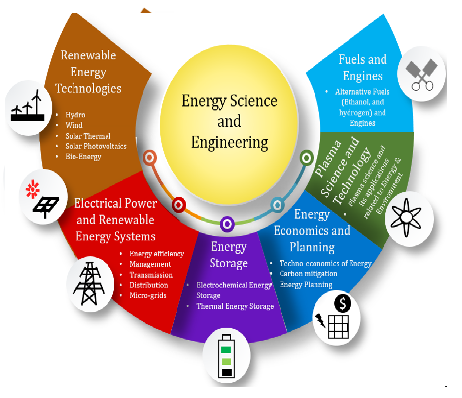
Ph.D. in Energy Science
A Ph.D. in Energy Science is a research-oriented program that investigates sustainable energy systems, renewable energy technologies, and the fundamental concepts that underpin energy production an...
Ph.D. in Energy Science
×A Ph.D. in Energy Science is a research-oriented program that investigates sustainable energy systems, renewable energy technologies, and the fundamental concepts that underpin energy production and consumption. The curriculum typically lasts 3 to 5 years and covers topics such as solar, wind, bioenergy, energy storage, and energy policy. Students conduct theoretical and practical research to address global energy concerns, increase energy efficiency, and develop novel clean energy solutions. In most cases, admission requires a Master's degree in Environmental Science, Physics, Chemistry, or a related discipline. Graduates improve energy research, sustainability, and policy by pursuing positions in academia, research institutions, or the energy industry.

Ph.D. in Public Policy
Ph.D. in Public Policy is a highly specialized research degree that focuses on the analysis, formulation, and evaluation of public policies at the local, national, and international levels. The cur...
Ph.D. in Public Policy
×Ph.D. in Public Policy is a highly specialized research degree that focuses on the analysis, formulation, and evaluation of public policies at the local, national, and international levels. The curriculum, which typically lasts three to five years, covers a wide range of topics including policy analysis, governance, public administration, economic policy, environmental policy, health policy, social justice, and the role of institutions in affecting public decisions. Students perform original research on the impact of government acts, policy effectiveness, policy formulation, and the influence of public opinion, interest groups, and political institutions on policymaking. Graduates of the program frequently work in academia, government agencies, think tanks, international organizations, non-governmental organizations (NGOs), or consulting businesses that focus on policy research and analysis. Admission normally requires a master's degree in public administration,political science, economics, or a related field, with strong analytical and research skills.

Ph.D. in Natural Resources & Sustainable Development
Ph.D. in Natural Resources & Sustainable Development typically takes 3-5 years, depending on the institution and research project. This interdisciplinary program combines environmental science,...
Ph.D. in Natural Resources & Sustainable Development
×Ph.D. in Natural Resources & Sustainable Development typically takes 3-5 years, depending on the institution and research project. This interdisciplinary program combines environmental science, policy, and management to address complex sustainability challenges. Students engage in advanced coursework, conduct original research, and complete a dissertation. Key areas of study include ecosystem management, climate change adaptation, resource economics, and environmental policy. The program prepares graduates for careers in academia, government agencies, NGOs, and international organizations. Applicants usually need a master's degree in a related field and research experience. This Ph.D. equips students with the skills to develop innovative solutions for sustainable resource management and environmental conservation on a global scale.

Ph.D. in Energy Studies and Environment Management
Ph.D. in Energy Studies and Environment Management emphasizes the integration of energy systems and environmental sustainability. The curriculum typically lasts 3 to 5 years and includes trai...
Ph.D. in Energy Studies and Environment Management
× Ph.D. in Energy Studies and Environment Management emphasizes the integration of energy systems and environmental sustainability. The curriculum typically lasts 3 to 5 years and includes training in renewable energy, environmental policy, climate change, resource management, and energy economics, as well as original research. Students learn about energy efficiency, sustainable energy technology, environmental impact assessments, and strategies for reducing the environmental impact of energy production. Graduates are prepared to work in academia, research institutes, government agencies, or industry, helping to develop sustainable energy solutions, environmental protection regulations, and advances in energy management and climate change mitigation.
Ph.D. in Environment and Sustainable Development
A Ph.D. in Environment and Sustainable Development is typically a 4-6 year program that provides advanced training in the interdisciplinary field of addressing environmental challenges through the...
Ph.D. in Environment and Sustainable Development
×A Ph.D. in Environment and Sustainable Development is typically a 4-6 year program that provides advanced training in the interdisciplinary field of addressing environmental challenges through the lens of sustainable development. Natural resource management, environmental policy, climate change mitigation, renewable energy systems, green technology, and the fusion of ecological, social, and economic concepts to support sustainable solutions are among the subjects covered in the curriculum. Students carry out original research to advance scholarly knowledge of topics like biodiversity conservation, sustainable urbanization, environmental justice, and the creation of novel, ecologically conscious practices and technologies. They frequently work in conjunction with governmental organizations, nonprofits, or international development institutions. Graduates of this degree are equipped for leadership positions in international organizations, sustainable development agencies, policy research, academia, and environmental consulting.
Ph.D. in Water Resource Management
Ph.D. in Water Resource Management emphasizes sustainable water usage, conservation, and policy creation. The curriculum, which typically lasts 3-5 years, combines training in hydrology, water econ...
Ph.D. in Water Resource Management
×Ph.D. in Water Resource Management emphasizes sustainable water usage, conservation, and policy creation. The curriculum, which typically lasts 3-5 years, combines training in hydrology, water economics, environmental science, and water governance with original research. Students address global water issues like as scarcity, pollution, and climate change effects. Graduates engage on water resource planning, policy development, and management projects in academia, government agencies, environmental consultancies, and non-governmental organizations (NGOs). Admission typically requires a Master's degree in environmental science, civil engineering, or a related discipline, as well as good research skills.