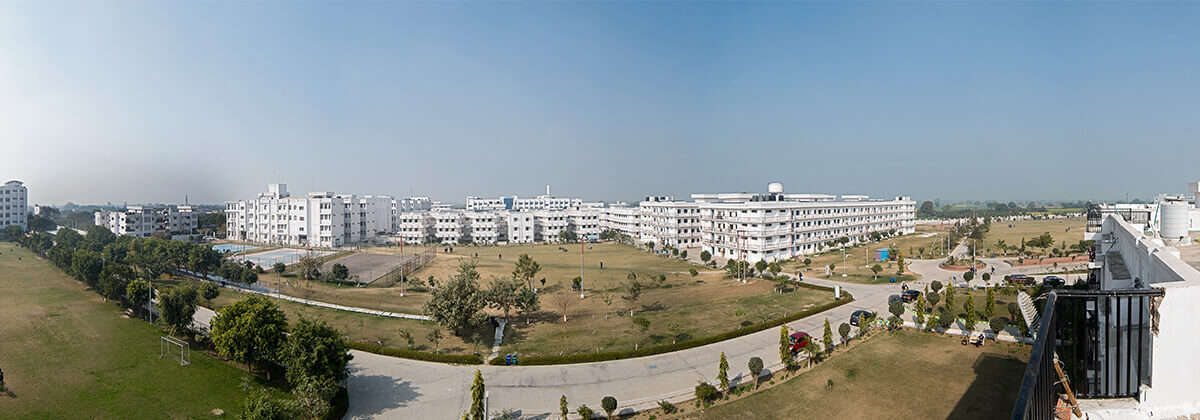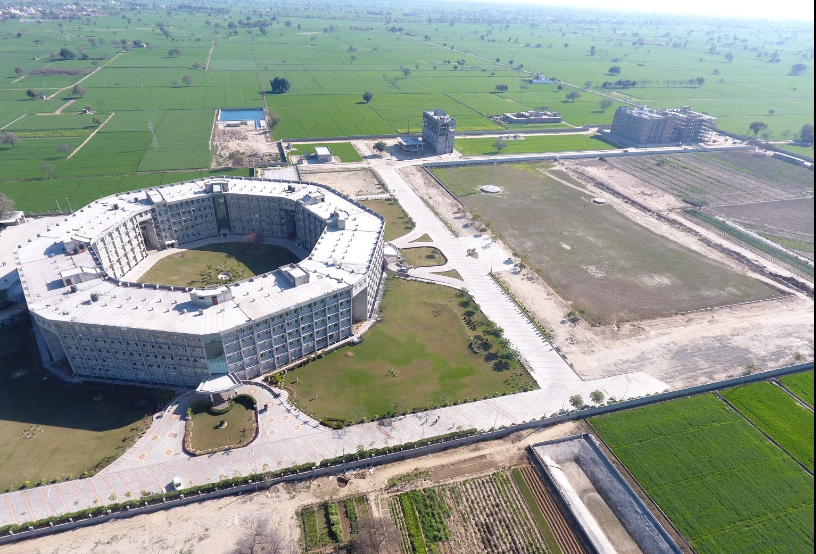
Introduction about Ph.D. in Botany at Akal University
Pursuing a Ph.D. in Botany at Akal University opens the doors to a world of scientific discovery, advanced research, and impactful careers in academia, industry, and environmental consultancy. As a leading institution that blends traditional botanical wisdom with cutting‑edge technology, Akal University provides aspiring scholars with a robust platform to explore plant biology, genetics, ecology, and biotechnology. Whether you aim to develop climate‑resilient crops, uncover new medicinal compounds, or contribute to biodiversity conservation, this doctoral program equips you with the expertise and resources to turn your vision into reality.
Eligibility Criteria for Ph.D. in Botany at Akal University
Candidates seeking admission must meet the following minimum requirements:
- A Master’s degree (M.Sc., M.Phil., or equivalent) in Botany, Plant Sciences, or a closely related discipline with at least 55% aggregate.
- Valid PhD Admission Assistance documentation (if required).
- Good academic standing with at least two scholarly publications (optional but advantageous).
- Eligibility for the university‑conducted entrance test or a recognized national exam (e.g., NET, GATE).
- Proficiency in English (minimum TOEFL/IELTS scores for international applicants).
Entrance Exam for Ph.D. in Botany at Akal University
The entrance assessment comprises two stages:
- Written Examination – A 90‑minute test covering core Botany concepts, research methodology, and analytical reasoning.
- Interview / Presentation – Candidates present a research proposal, followed by a viva‑voce to evaluate research aptitude and communication skills.
Candidates who hold a valid NET or GATE score in a relevant discipline are exempted from the written component and directly proceed to the interview stage.
Fee Structure for Ph.D. in Botany at Akal University
| Component | Annual Fee (INR) | Notes |
|---|---|---|
| Tuition & Laboratory Fees | 85,000 | Includes access to greenhouse, molecular labs, and field stations. |
| Research Material & Consumables | 30,000 | Estimated per‑year cost for reagents, seeds, and field surveys. |
| Library & Digital Resources | 7,500 | Unlimited access to journals, e‑books, and databases. |
| Administrative & Examination Charges | 5,000 | Includes registration, thesis submission, and evaluation fees. |
| Total Approximate Cost | 127,500 | Subject to revision each academic year. |
Admission Process for Ph.D. in Botany at Akal University
The admission workflow is streamlined into clear steps to ensure transparency:
- Online Application – Submit the application form via the university portal along with scanned copies of academic records and a brief research proposal.
- Document Verification – The admission committee reviews eligibility, validates certificates, and may request additional documents.
- Entrance Examination – Appear for the written test (or submit NET/GATE scores) and attend the interview.
- Selection & Offer Letter – Successful candidates receive an official admission letter with fee details and scholarship information.
- Enrollment & Orientation – Complete fee payment, register for courses, and attend the Ph.D. orientation program.
Ph.D. Subjects and Specializations in Botany at Akal University
The doctoral program offers a range of specialised tracks that align with emerging trends in plant science:
- Plant Molecular Genetics & Genomics
- Plant Physiology & Stress Biology
- Ecology, Biodiversity & Conservation
- Phytochemistry & Natural Product Research
- Agricultural Biotechnology & Crop Improvement
- Plant Pathology & Integrated Pest Management
- Ethnobotany & Traditional Medicinal Plants
Research Areas in Botany at Akal University
Faculty members lead cutting‑edge projects across diverse themes, including:
- CRISPR‑based genome editing for climate‑resilient crops.
- Metabolomic profiling of medicinal plants for drug discovery.
- Restoration ecology in degraded ecosystems.
- Plant‑microbe interactions and sustainable agriculture.
- Remote sensing and GIS applications in forest monitoring.
- Functional genomics of rare and endangered species.
Documents Required for Ph.D. in Botany at Akal University
| Document | Format | Remarks |
|---|---|---|
| Academic Transcripts (M.Sc./M.Phil.) | PDF, notarised | Must reflect minimum 55% aggregate. |
| Research Proposal (2,000‑3,000 words) | Include objectives, methodology, and expected outcomes. | |
| Scorecard of NET/GATE (if applicable) | Exemption from written test. | |
| Curriculum Vitae | Highlight publications, conferences, and research experience. | |
| Letter of Recommendation (2) | Preferably from academic supervisors. | |
| Proof of Identity (Aadhaar/Passport) | Government‑issued photo ID. |
Akal University Ph.D. Syllabus for Botany
The syllabus is designed to build a solid foundation while fostering independent research. Core modules include:
- Advanced Plant Anatomy & Morphology
- Plant Biochemistry & Molecular Biology
- Statistical Methods & Bioinformatics for Plant Sciences
- Research Methodology & Scientific Writing
- Seminars on Emerging Topics in Botany
- Thesis Research (80% of total credits)
Akal University Research Methodology for Ph.D. in Botany
The program emphasizes a rigorous, interdisciplinary approach:
- Literature Review – Critical analysis of current research using databases such as Scopus and Web of Science.
- Experimental Design – Formulation of hypotheses, selection of appropriate controls, and power analysis.
- Data Acquisition – Field surveys, greenhouse experiments, and high‑throughput sequencing.
- Statistical Analysis – Utilising R, Python, or SPSS for data interpretation; Research Data Analysis Services are available for support.
- Manuscript Preparation – Drafting, peer review, and submission to high‑impact journals.
- Thesis Defense – Formal oral examination before an expert panel.
Highlights of Ph.D. in Botany at Akal University
| Feature | Benefit |
|---|---|
| State‑of‑the‑art Greenhouse & Molecular Labs | Hands‑on training with cutting‑edge equipment. |
| International Collaboration Network | Joint projects with leading universities worldwide. |
| Sponsored Research Grants | Access to funding from DBT, ICAR, and private foundations. |
| Industry‑Linkage Programs | Internships and consultancy opportunities with agro‑companies. |
| Comprehensive Publication Support | Guidance from experienced editors; Research Paper Writing Services available. |
How To Apply for Ph.D. in Botany at Akal University
Follow these step‑by‑step instructions to submit a successful application:
- Visit the official Complete Guide to PhD Admission & Research Services page for detailed timelines.
- Create an account on the Akal University admissions portal.
- Upload the required documents (refer to the “Documents Required” table).
- Enter your research proposal and select a preferred supervisor from the faculty list.
- Pay the application fee (INR 2,500) via net banking or credit card.
- Submit the application and note the generated reference number for future correspondence.
- Prepare for the entrance test or arrange for NET/GATE score submission.
Career Scope and Job Opportunities After Ph.D. in Botany from Akal University
Graduates emerge as experts ready to lead in various sectors:
- Academic Positions – Assistant Professor, Associate Professor, or Research Scientist in universities and research institutes.
- Industry Roles – R&D manager, Crop‑improvement specialist, or Biotechnology analyst in agro‑chemical firms.
- Government & NGOs – Policy advisor, Conservation program director, or Environmental impact assessor.
- Entrepreneurship – Launching start‑ups focused on bio‑fertilizers, phytochemical extraction, or precision agriculture.
- International Careers – Post‑doctoral fellowships and research collaborations abroad.
The interdisciplinary skill set—encompassing laboratory techniques, data analytics, and scientific communication—makes Ph.D. Botany graduates highly sought after in a rapidly evolving green economy.