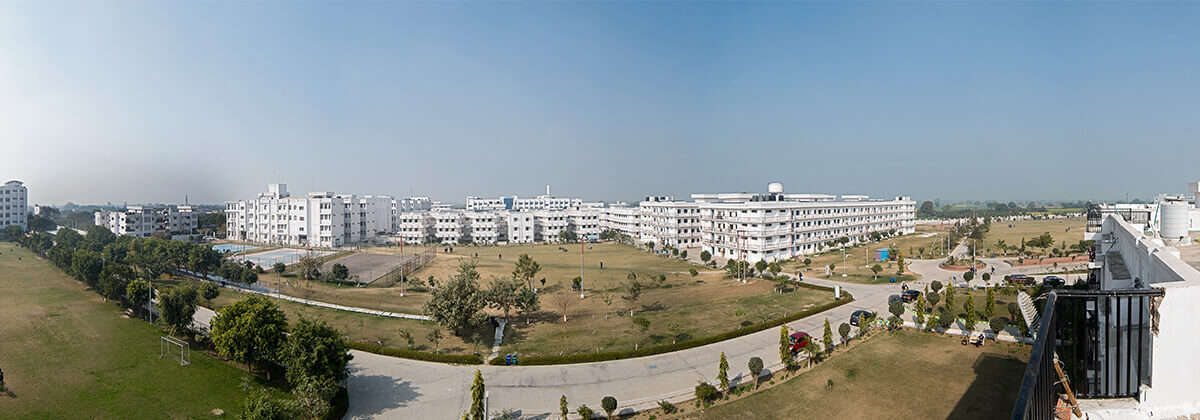
Ph.D. in Chemistry from Fakir Mohan University: Eligibility, Entrance Exam, Fee Structure, Admission Process, Subjects, Research Areas, Syllabus, Scholarship & Career Scope
Introduction about Ph.D. in Chemistry at Fakir Mohan University
Fakir Mohan University (FMU) has emerged as a beacon for advanced chemical research in Eastern India. The Ph.D. in Chemistry program is meticulously designed for seasoned professionals eager to deepen their expertise, contribute to cutting‑edge research, and lead innovation in academia or industry. With state‑of‑the‑art laboratories, a robust network of research collaborations, and distinguished faculty, FMU offers an inspiring environment where scholarly passion meets practical impact.
Eligibility Criteria for Ph.D. in Chemistry at Fakir Mohan University
Prospective candidates must satisfy the following criteria:
- Master’s degree (M.Sc.) in Chemistry or a closely related discipline with a minimum of 55% marks (or 5.5 CGPA) from a recognized university.
- For candidates holding a B.E./B.Tech in Chemical Engineering, a minimum of 60% is required.
- Valid GATE score in Chemistry (or related subjects) is advantageous but not mandatory.
- English proficiency (if the medium of instruction is English) – IELTS 6.0 or TOEFL iBT 70 (for overseas students).
- Professional experience of at least two years in research or industry can enhance the application profile.
Entrance Exam for Ph.D. in Chemistry at Fakir Mohan University
FMU conducts an annual FMU Ph.D. Entrance Test for Chemistry. The exam evaluates:
- Fundamental concepts in Organic, Inorganic, Physical, and Analytical Chemistry.
- Research aptitude through a written proposal abstract.
- Analytical reasoning and problem‑solving abilities.
Candidates may also qualify via national-level exams such as GATE, CSIR‑NET, or UGC NET. Successful candidates are called for a personal interview to assess research alignment and motivation.
Fee Structure for Ph.D. in Chemistry at Fakir Mohan University
| Fee Component | Amount (INR) | Notes |
|---|---|---|
| Admission Processing Fee | 5,000 | One‑time, non‑refundable |
| Annual Tuition & Laboratory Charges | 18,000 | Payable each academic year |
| Research Material & Consumables | 10,000 | Estimated per year |
| Library & Online Database Access | 2,500 | Annual fee |
| Miscellaneous (Sports, Health, etc.) | 1,500 | Optional |
| Total Approximate Cost (3‑Year Program) | 99,000 | Excluding scholarships and stipends |
Admission Process for Ph.D. in Chemistry at Fakir Mohan University
- Online Application: Fill the FMU portal application form and upload scanned copies of academic transcripts, ID proof, and a research proposal draft.
- Entrance Examination: Appear for the FMU Ph.D. Entrance Test or submit a valid national exam score.
- Interview & Proposal Review: Shortlisted candidates are invited for a personal interview and a detailed discussion of their research proposal.
- Final Merit List: Based on academic performance, entrance score, and interview assessment, FMU releases the final list of selected candidates.
- Admission Confirmation: Accepted candidates confirm admission by paying the processing fee and submitting the enrollment form.
Ph.D. Subjects and Specializations in Chemistry at Fakir Mohan University
FMU offers a diverse range of specializations, allowing candidates to tailor their research to emerging scientific challenges:
- Organic Synthesis & Medicinal Chemistry
- Physical Chemistry & Spectroscopy
- Inorganic Materials & Nanostructures
- Analytical Chemistry & Environmental Monitoring
- Polymer Chemistry & Biopolymers
- Theoretical & Computational Chemistry
Research Areas in Chemistry at Fakir Mohan University
Faculty members are engaged in nationally funded projects across the following domains:
- Green Chemistry: Development of sustainable catalytic processes and waste‑reduction strategies.
- Energy Materials: Exploration of photovoltaic, fuel‑cell, and battery materials.
- Pharmaceutical Chemistry: Design of novel drug molecules and delivery systems.
- Environmental Remediation: Advanced adsorbents for heavy‑metal and organic pollutant removal.
- Computational Modelling: Quantum chemical calculations and molecular dynamics simulations.
- Nanotechnology: Synthesis of functional nanomaterials for sensors and catalysis.
Documents Required for Ph.D. in Chemistry at Fakir Mohan University
| Document | Requirement |
|---|---|
| Academic Transcripts (M.Sc. / B.E.) | Original + Verified photocopy |
| Letter of Recommendation (2) | From academic supervisors or industry mentors |
| Research Proposal (2,000‑2,500 words) | Includes objectives, methodology, and expected outcomes |
| Proof of Entrance Exam Score | GATE/CSIR‑NET/UGC NET or FMU test result |
| Identity Proof (Aadhar/Passport) | Valid government‑issued ID |
| Experience Certificate (if applicable) | From previous research or industry positions |
Fakir Mohan University Ph.D. Syllabus for Chemistry
The syllabus blends core coursework with research milestones:
- Core Modules (Year 1): Advanced Organic Chemistry, Physical Chemistry of Materials, Spectroscopic Techniques, Research Methodology.
- Elective Modules (Year 2): Choose two from Nanochemistry, Environmental Chemistry, Computational Chemistry, or Pharmaceutical Chemistry.
- Research Milestones: Literature review, proposal defense, experimental work, data analysis, thesis writing, and viva‑voce.
How To Apply for Ph.D. in Chemistry at Fakir Mohan University
Follow these steps to submit a successful application:
- Visit the official FMU admissions portal and create a user account.
- Complete the online application form with personal, academic, and professional details.
- Upload the required documents (see the Documents Required table).
- Pay the non‑refundable processing fee through the secure payment gateway.
- Submit the application before the announced deadline. You will receive an email confirmation with an application ID.
Career Scope and Job Opportunities After Ph.D. in Chemistry from Fakir Mohan University
Graduates are well‑positioned for high‑impact roles:
- Academic Positions: Assistant Professor, Research Fellow, Department Head.
- Industry R&D: Senior Scientist, Project Lead in pharmaceuticals, petrochemicals, materials, and agro‑chemicals.
- Government & Public Sector: Research Scientist at CSIR labs, DRDO, or Ministry of Science & Technology.
- Entrepreneurship: Founding biotech or chemical start‑ups, consultancy services.
- Patents & Intellectual Property: Patent Analyst or Manager in corporate legal teams.
Our alumni network highlights success stories ranging from publications in top‑tier journals to securing international patents.
Scholarship for Ph.D. in Chemistry at Fakir Mohan University
FMU offers several financial aid options to merit‑based candidates:
- FMU Merit Scholarship: Covers 50% of tuition for students with a CGPA ≥ 8.5.
- UGC‑SRF Fellowship: Annual stipend of INR 31,000 plus contingency grant.
- CSIR‑NET Junior Research Fellowship (JRF): Full stipend and research allowance.
- Industry Sponsored Stipends: Partnerships with leading chemical firms providing project‑specific funding.
FAQs Regarding Ph.D. in Chemistry at Fakir Mohan University
- 1. Can I pursue a Ph.D. part‑time while working?
- Yes. FMU allows part‑time registration for professionals with a minimum of 20 hours/week dedication to research.
- 2. Is there a provision for a joint Ph.D. with other universities?
- Collaborative Ph.D. programs are available through MoUs with institutes such as IIT Kharagpur and JNU, Delhi.
- 3. What is the typical duration of the Chemistry Ph.D.?
- The program is structured for 3 years, but extensions up to 5 years are granted based on research progress.
- 4. How are research topics assigned?
- Candidates propose a research theme; after approval, they are matched with a faculty supervisor whose expertise aligns with the topic.
- 5. Are there any language proficiency requirements for foreign scholars?
- Yes.